
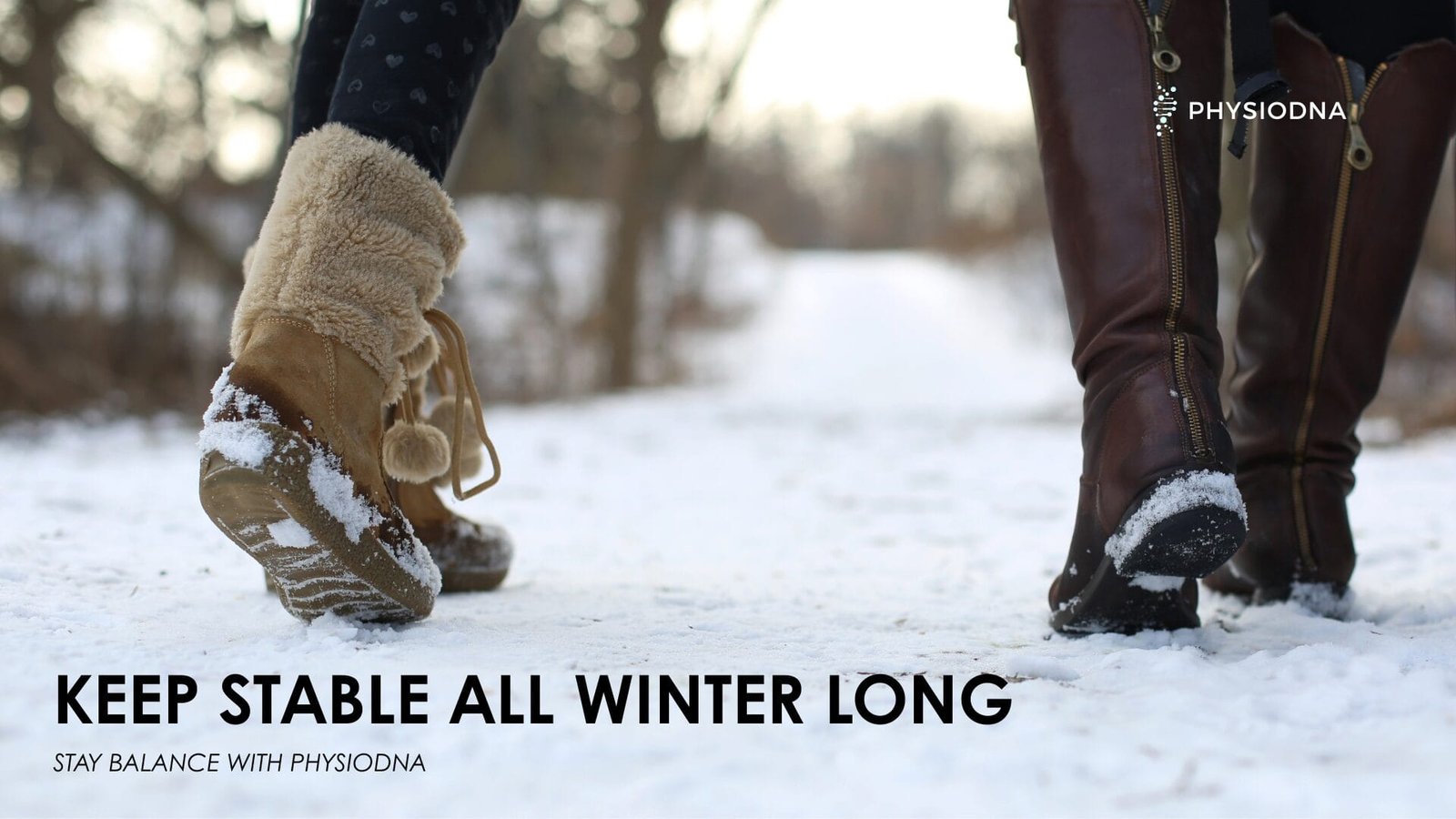
As temperatures drop, many people notice that their balance feels “off.” Simple tasks like walking to the car, climbing stairs, or carrying groceries can suddenly feel more challenging. While winter brings its own charm, it also introduces real changes in how the body moves. Understanding why this is is the first step to staying safe these cold winter months.
How Do Cold Temperatures Affect the Body?
When exposed to cold weather, the body works harder to conserve heat. One of the first systems affected is the muscles.
Cooler temperatures can lead to:
- Slower muscle contractions, making it harder to react quickly to slips.
- Reduced joint mobility, especially in the ankles, knees, and hips
- Stiffness in tendons and ligaments, which limits smooth, coordinated movement.
With the reduced circulation in the limbs the body finds it hard to activate causing reduced stability and coordination even during routine tasks
Icy and unpredictable surfaces challenge the body
Winter conditions put the body’s balance system to the test. With snow, slush, and ice, the ground becomes a constantly changing surface, forcing your neuromuscular system to work overtime.
Some key challenges include:
- Unstable footing – Ice reduces friction, making slips more likely.
- Hidden hazards – Snow can cover uneven surfaces, curbs, or dips
- Delayed reaction time – The body responds more slowly when muscles are cold, giving you less time to correct a misstep.
- Footwear limitations – Bulky or worn-out winter boots can affect how your foot hits the ground.
These environmental factors mean even people with good balance may find winter walking more demanding.
Older folk often struggle with reflexes and balance. With these slower motor functions they find it hard to brace themselves when walking on rough terrain, increasing their risks for falling and injury.
What to do when you fall
Falls can happen suddenly, but knowing what to do in those first few moments can impact the rate of recovery.
1. Check Yourself for Injury Before You Get Up
Before you try to stand, take a moment to assess how you feel.
- Are you in pain?
- Can you move all your limbs normally?
- Do you feel dizzy or confused?
After initial assessment on how you feel, slowly wiggle your fingers and toes, bend your knees if you can, and roll gently to your side. If anything feels sharp, severe, or unusual, stay where you are and call for help.
2. Know Who to Call If you’re alone
Try to reach a phone or call out to a nearby person. If someone is with you, let them support you without pulling you up too quickly. Your safety comes first ensure that when getting up to avoid making the injury worse.
3. Call 911 If Necessary
Certain symptoms require immediate medical attention. Call 911 if:
- You hit your head
- You lost consciousness, even briefly
- You feel confused, nauseous, or extremely dizzy
- You suspect a broken bone
- You can’t stand or walk without significant pain
In any situation if you feel in need never hesitate to call head injures, falls and slips can be more serious that you think
4. Physio Aftercare
Even if you feel “mostly fine,” fall-related injuries can show up hours or days later.
A physiotherapist can:
- Check your mobility and balance
- Identify strains, sprains, or stiffness
- Provide exercises to restore strength and prevent future falls
- Create a personalized recovery plan
Seeing a physio can help you get back to normal faster and reduce your risk of falling again.
Preventive measures
Here are effective steps to stay steady:
– Warm Up Before Going Outside
A quick warm-up indoors increases blood flow and reduces stiffness. Try these exercises to increase blood flow. Marching place, ankle circles, gentle squats, or swinging your arms.
– Wear Proper Footwear Choose boots with:
- Good ankle support
- Non-slip soles
- Proper insulation to keep your feet warm and responsive
– Learn more about proper winter footwear through reading the blog posted on “Importance of Proper Winter Footwear”
– Move Slowly and Deliberately
– Take smaller steps and keep your center of gravity over your feet.
– Keep Walkways Clear
– Use salt, sand, or ice melt to create safer paths around your home to prevent casualties of slipping as much as possible
– Stay Active Indoors
– Maintain strength and mobility with stretching, balance exercises, or simple home workouts. Consistency helps offset winter inactivity.
What we can do to help
If winter has made you feel unsteady, you’re not alone. A physiotherapist can assist you in advice in all things you’re concerned about when it comes to your physical health.
A physiotherapist can help you:
- Assess your balance, strength, and mobility Identify which muscles or joints are contributing to instability
- Build a personalized home exercise program Improve your reaction time and confidence on icy or slippery surfaces
- Provide hands-on treatment to reduce stiffness and improve movement
- After a fall, or even a near fall, physio can also support safe recovery and prevent future incidents.
Final thoughts
Winter can be beautiful, but it brings real challenges for your balance and mobility. Understanding how cold weather affects your body and taking simple preventive steps can dramatically reduce your risk of falls. If you do need support, physiotherapy offers effective tools to keep you strong, steady, and safe all season long.
Stay warm, stay active, and stay balanced this winter!
About the Authors
Sameenah Navsa
Clinic Manager & Administrator, Bachelor’s of Kinesiology & Physical Education
&
Elaina Cardwell
PhysioDNA Intern Student