
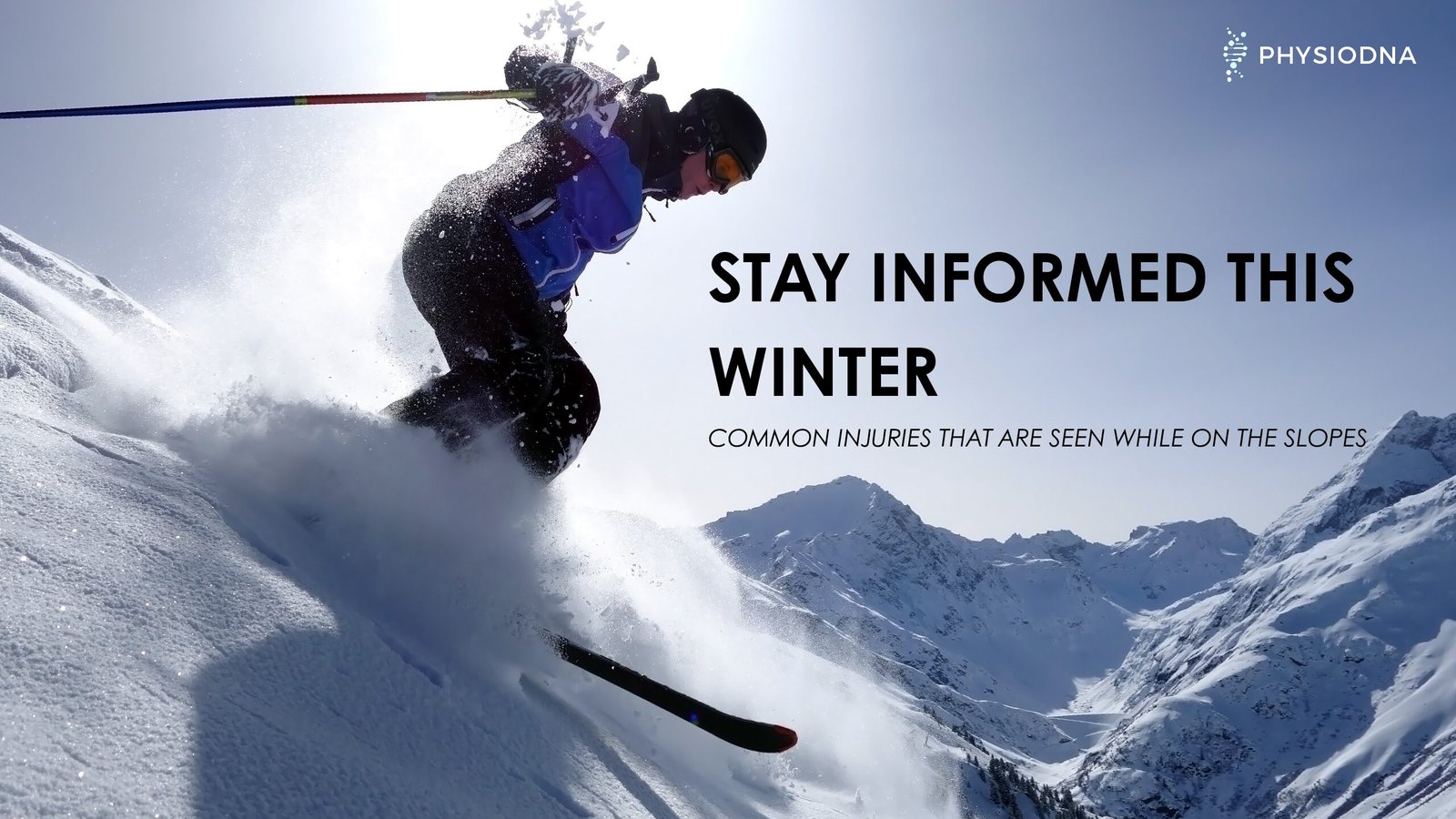
With winter approaching, many athletes are preparing to return to the slopes. Snowboarding and skiing both offer physical challenge, excitement, and the thrill of speed. However, each sport is associated with distinct injury patterns. Understanding the most common injuries and how to manage them can help athletes recover effectively and reduce the risk of re-injury.
What are the most common Snowboarding Injuries?
When descending the mountain, unexpected patches of ice can cause sudden falls. In these situations, snowboarders often instinctively extend their hands to break the fall, placing significant stress on the wrists. The wrist is the most frequently injured site in snowboarding, accounting for approximately 22% of all snowboarding injuries. Snowboarders remain fixed to their boards, unable to step out during a fall, relying on the upper limbs to break their falls.
Approximately two-thirds of wrist injuries are fractures, most commonly involving the distal radius. Snowboarders experience up to a tenfold higher risk of wrist injury compared to skiers, and nearly one-third of these injuries occur in beginners.
Damages to the writs can also include:
- scaphoid fractures
- perilunate dislocations
- ligamentous injuries
Which overall may require more extensive intervention and longer rehabilitation periods.
Rehabilitation for Wrist Injuries
For non-operative management of a distal radius fracture, the wrist is typically immobilized in a cast or splint for 4–6 weeks. During immobilization, it is essential to maintain shoulder, elbow, and finger mobility to prevent joint stiffness and muscle atrophy.
Following immobilization:
- Initiate gentle active and passive range-of-motion (ROM) exercises to restore flexibility
At approximately six weeks:
- Introduce progressive wrist-strengthening exercises to rebuild support and stability
More complex injuries, such as scaphoid fractures or ligamentous damage, may require a tailored physiotherapy program with a longer recovery timeline to regain full function.
Ankle Injuries in Snowboarding
Ankle injuries are also common among snowboarders, with sprains (52%) occurring slightly more often than fractures (48%).
Most ligamentous injuries are treated conservatively.
Rehabilitation for Ankle Injuries
Rehabilitation typically includes:
- Gradual range-of-motion and weight-bearing activities
- Often supported by a walking boot or ankle brace.
- Proprioceptive and balance training
- Restoring neuromuscular control and ankle stability.
- Lower-limb strengthening and closed-chain exercises
- Optimising long term joint control and function.
Often it is said that you are able to recover after 6–12 weeks, depending on the severity of the injury and the rehabilitation protocols.
What are the most common Skiing Injuries?
In contrast to snowboarding, skiing injuries most frequently involves the knee. The restrictive nature of ski boots and the fixed position of the skis increase rotational forces on the lower limb during falls or sudden directional changes.
Soft-tissue knee injuries account for approximately 34% of all ski injuries, with the medial collateral ligament (MCL) affected in nearly 60% of these cases. MCL sprains represent about 16% of total ski injuries, typically resulting from valgus stress or twisting mechanisms while the ski remains anchored.
Rehabilitation for Knee Injuries
Rehabilitation focuses on restoring motion, strength, and stability while minimising pain and swelling.
A structured program generally includes:
- Range-of-motion exercises
- These prevent stiffness and maintain joint mobility.
- Progressive strengthening
- particularly targeting the quadriceps and hamstrings.
- Proprioceptive and balance
- retraining to enhance knee stability and neuromuscular control.
Depending on injury severity, return to skiing or comparable activities is usually expected in about 4–12 weeks.
Final Thoughts
Both snowboarding and skiing pose unique injury risks, most commonly affecting the wrist and knee. Regardless of the sport, early physiotherapy intervention plays a vital role in promoting tissue healing, restoring function, and reducing the likelihood of chronic complications.
A personalised rehabilitation program, designed and supervised by a qualified physiotherapist, supports safe recovery through targeted exercises, progressive loading, and education on injury prevention strategies.
With proper management, gradual progression, and adherence to professional guidance, athletes can confidently return to the slopes, stronger, more resilient, and better equipped to prevent future injury.
Sources:
Bladin, C., McCrory, P., & Pogorzelski, A. (2004). Snowboarding injuries: current trends and future directions. Sports Medicine, 34(2), 133-138.
Helmig, K., Treme, G., & Richter, D. (2018). Management of injuries in snowboarders: rehabilitation and return to activity. Open access journal of sports medicine, 221-231
About the Authors
Forest Chak
Registered Physiotherapist
Book with Forest at our Spadina location!
&
Sameenah Navsa
Clinic Manager & Administrator, Bachelor’s of Kinesiology & Physical Education
&
Elaina Cardwell
PhysioDNA Intern Student